A Windowsill Herb Garden That Fits Into Everyday Life
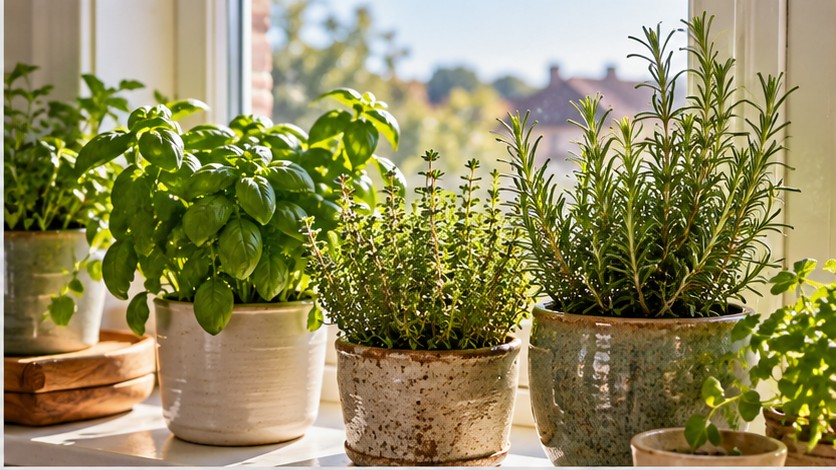
A windowsill herb garden is one of the simplest ways to bring something living into a kitchen, but it works best when the setup matches the room rather than an idealised picture of indoor gardening. The important questions are practical: how many hours of light reach the window, how warm the sill becomes, and whether you will actually remember to water the pots.
Three or four healthy plants are more useful than a crowded row of struggling ones. Begin small, learn how the window behaves through a week of changing weather, and add more only when the first herbs are settled.
Start with the light, not the shopping list
Most culinary herbs prefer bright conditions. A sunny south- or west-facing window can support basil, thyme and rosemary, while a slightly gentler window may suit parsley, mint or chives. If the sill gets intense afternoon heat, check whether leaves are touching hot glass and move the pots a few centimetres back when necessary.
Observe the space at different times of day before buying anything. A window that seems bright at breakfast may be shaded by another building after noon. Understanding that pattern makes plant choice much easier.
Choose herbs you already cook with
There is little value in growing six varieties because they look charming together if only one ever reaches the plate. Basil is useful for pasta, salads and sandwiches; chives are easy to snip over eggs and potatoes; thyme works in roasted dishes; mint is convenient for tea and fruit. Rosemary needs more light and a slightly drier rhythm, so it is often happiest in its own pot.
Separate pots also make care simpler. Herbs do not all drink at the same speed, and individual containers let you move a plant, turn it towards the light or replace one without disturbing the rest.
Use containers that forgive mistakes
Drainage holes matter more than decorative finishes. A pot that allows excess water to escape helps prevent roots from sitting in constantly wet compost. Place a saucer underneath, and empty standing water after a thorough watering. If you prefer decorative cachepots, keep the herb in a smaller nursery pot inside and lift it out to water.
A loose potting mix designed for containers is usually easier to manage than dense garden soil. The aim is a root environment that holds some moisture but still contains air.
Water by checking, not by calendar
Indoor herbs rarely follow a perfect schedule. Heating, sunlight, plant size and pot material all change how quickly the compost dries. Press a finger into the top couple of centimetres of soil and lift the pot occasionally; with practice, its weight becomes a useful clue. Water thoroughly when the plant needs it, then allow excess water to drain.
Basil and parsley usually prefer more consistent moisture. Thyme and rosemary are happier when the surface dries somewhat between waterings. Mint is vigorous and thirsty, which is another reason to keep it in a separate container.
Harvest little and often
Regular cutting encourages many herbs to stay bushy. Pinch basil just above a pair of leaves rather than stripping leaves from the bottom. Trim chives a few centimetres above the soil. Take small thyme or rosemary sprigs as needed and avoid removing too much of a young plant at once.
The point is not to produce supermarket quantities. A windowsill garden is successful when it gives you a handful of fresh leaves at the right moment, adds a little green to the room, and remains easy enough that caring for it becomes part of the everyday rhythm rather than another task to manage.